


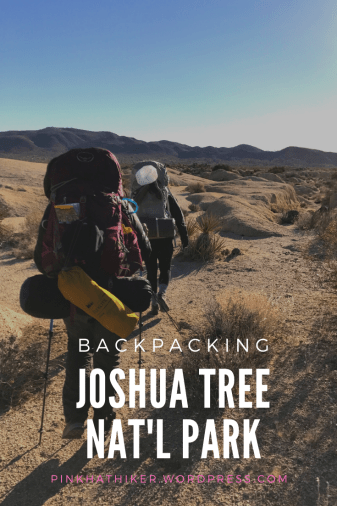
For many hikers, the next step for them is backpacking. But where do you go? When do you go? What do you bring? These are the questions I get most often. During the Fall and Winter months, backpacking in the mountains is out, so I suggest backpacking in Joshua Tree National Park. Because you only need to trek in one mile from the roads into the designated wilderness areas, you’re never too far from your car making this a great first backpacking trip as well!
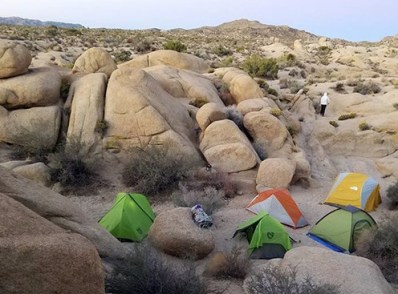
JTNP boasts 13 backcountry boards throughout the North and South sides of the Park. This is where you get your walk-up permit and park your car. If you’re looking for seclusion, I suggest checking out the boards near the South/Cottonwood entrance as the Northern side of the Park tends to be busier. My favorite spot is located in the Twin Tanks area, 7 miles from the North entrance. This spot is perfect because it is as close the middle of the Park as you can get. But, it also makes it a popular destination. Each time I’ve backpacked into this area, I’ve been met with other backpackers pretty close to our site. This can be both a blessing and a curse; it’s great to know there is someone else nearby if you need help, but it also can get so crowded that it feels more like car camping.
There are rules when camping in the backcountry of the Park; remember, this isn’t car camping.
Here’s what you need to know:
- Backcountry camping in JTNP is free. That’s right! The only fee you’ll need to pay is the Park entrance fee.
- You must register for a walk-up permit at the backcountry registration board. Bring a pen! There isn’t always one available at the board. This is where you will register your car’s license plate so that your car isn’t towed.
- Practice Leave No Trace! Pack out what you pack in and leave it better than when you arrived.
- Campsites must be setup 1 mile from the road and 500 feet from any trail.
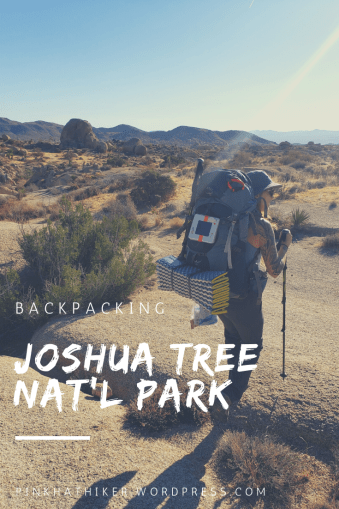
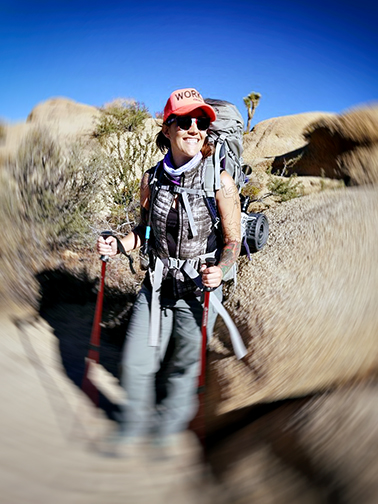 Now that we’ve gotten the rules out of the way, what do you bring when backpacking in Joshua Tree during the fall and winter months? Well, the most important things are going to be your 10 Essentials (read my article here to get a breakdown of the Essentials). Because there is no potable water available in the backcountry, and no place for you to filter water, you have to pack in ALL of your water. In the past, I’ve packed in 3 liters in my backpack, and left gallon jugs at the car. Since the car is only a short distance from camp, there’s not as much of a need to pack it all in (though I have done that in the past too). One day I plan to trek through the entire Park over 3 days and will have to plan water drops to replenish my water supply as I go. But that’s a post for another day. 😉
Here’s a PDF of my packing list from my recent 3 day/2 night trip into the Park’s backcountry: Joshua Tree Backpacking List November 2017. Feel free to use this list and add/remove whatever items you see fit.
So, if you’re ready to take the plunge into backpacking and are looking for a good place to start during the fall and winter months, I highly suggest backpacking in Joshua Tree National Park. If you have any questions, leave a comment below or use the contact form. I’d love to hear from you! And, if you’re looking to join me on an upcoming adventure, check out MtnChicks.com for a list of the upcoming events.
Hike (and backpack) safe, and see you on the trails!


 The Pink Hat Hiker